How to Use Business Bank Statements to Qualify for a Low Doc Home Loan
For self-employed Australians, securing a home loan can feel like navigating a maze blindfolded. Traditional lenders demand two years of tax returns and financial statements—documents that may not reflect your true income due to legitimate business deductions. Enter low doc home loans, which offer an alternative path to homeownership by accepting business bank statements as primary income evidence. This guide explains how to leverage your business bank statements to qualify, what lenders look for, and strategies to strengthen your application.

Understanding Low Doc Home Loans and Business Bank Statements
A low doc home loan is designed for self-employed borrowers who cannot provide standard income documentation like PAYG payslips or tax returns. Instead, lenders accept alternative income verification, with business bank statements being the most common. These loans typically have slightly higher interest rates and may require a larger deposit (often 20% or more), but they provide a viable route to homeownership for entrepreneurs, freelancers, and small business owners.
In 2025, the Australian low doc mortgage market has evolved significantly. According to the Australian Bureau of Statistics (ABS), as of February 2025, there are over 2.5 million actively trading businesses in Australia, with the majority being small businesses. Many of these business owners struggle to meet traditional lending criteria despite having healthy cash flows. Industry data from the Mortgage & Finance Association of Australia (MFAA) indicates that low doc loans accounted for approximately 5% of all new residential lending in 2024, highlighting their growing importance.
What Are Business Bank Statements?
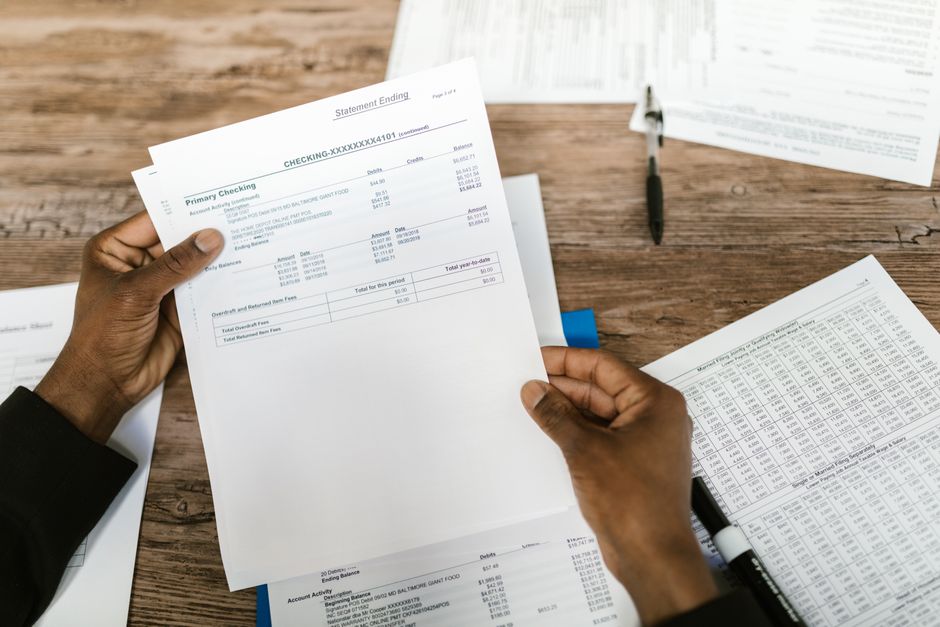
Business bank statements are official records of all transactions in your business bank account over a specific period. They show deposits, withdrawals, and ending balances, providing a clear picture of your business’s cash flow. Lenders use these statements to assess your income stability and ability to repay a loan.
Why Lenders Accept Business Bank Statements
Lenders recognise that tax returns often show minimal taxable income after deductions for depreciation, home office expenses, and other legitimate claims. Business bank statements, on the other hand, reveal gross deposits—money actually flowing into the business. This gives a more accurate representation of your capacity to service a loan. However, not all deposits are treated equally; lenders typically only consider a percentage of gross deposits (usually 50-80%) to account for business expenses and fluctuations.
Lender Requirements for Business Bank Statements
Each lender has its own criteria, but most follow similar guidelines. Understanding these requirements upfront can save you time and increase your chances of approval.
Acceptable Statement Periods
Most low doc lenders require business bank statements covering a minimum of 6 to 12 consecutive months. The most common requirement is 12 months, but some lenders may accept 6 months if you have a strong credit history or are an existing customer. In 2025, a growing number of non-bank lenders have introduced 6-month statement options to attract self-employed borrowers with shorter business histories.
Lenders typically require the statements to be:
- For a business account in your name or your business’s name
- From an authorised deposit-taking institution (ADI) like a major bank, credit union, or building society
- Consecutive months with no gaps
- Recent (usually the most recent 6-12 months ending within 30-90 days of application)
Types of Deposits Considered
Not all deposits are considered income. Lenders focus on regular, consistent business revenue deposits. They may exclude:
- One-off large deposits (e.g., asset sales, loans)
- Inter-account transfers
- GST or tax refunds
- Personal transfers or injections
Some lenders use a formula: they take the total deposits, subtract identified non-recurring items, then apply a percentage (often 60-70%) to arrive at an annualised income figure. For example, if your business bank statements show $200,000 in deposits over 12 months, and $20,000 are one-off items, the lender might use $180,000 x 65% = $117,000 as your assessable income.
Account Conduct and Credit Assessment
Lenders also scrutinise account conduct. They look for:
- Regular, consistent deposits (weekly, fortnightly, or monthly patterns)
- No overdrawn periods or dishonoured transactions
- Minimal bounced cheques or failed direct debits
- A healthy average balance
Your personal and business credit history will also be assessed. A strong credit score (typically 622+ as per Equifax’s 2025 rating scale) can improve your chances, even with a shorter statement period.
How to Strengthen Your Low Doc Application Using Business Bank Statements
Maximising the strength of your application involves more than just handing over statements. Here are actionable tips to present your income in the best light.
1. Maintain a Dedicated Business Bank Account
If you’re mixing personal and business finances, stop now. Open a separate business transaction account and route all business income and expenses through it. This makes it easier for lenders to identify genuine business revenue and demonstrates financial discipline.
2. Show Consistent Deposits Over Time
Lenders love consistency. Even if your income is seasonal, aim to show a steady pattern of deposits. If possible, avoid large gaps or erratic deposit amounts. If your business has a seasonal peak, prepare a letter of explanation supported by historical data.
3. Minimise Cash Transactions
Cash deposits are harder to verify. Whenever possible, encourage clients to pay via bank transfer or direct deposit. If cash is a significant part of your business, deposit it regularly and keep detailed records to support the source of funds.
4. Keep Statements Clean
Avoid overdrafts, dishonoured payments, or excessive transfers to personal accounts. Lenders view these as signs of financial stress. Maintain a buffer in your account to cover expenses and avoid dipping into overdraft.
5. Provide Supplementary Documentation
While business bank statements are the primary document, additional evidence can strengthen your case. Consider providing:
- BAS (Business Activity Statements) lodged with the ATO
- An accountant’s letter confirming your income and business viability
- Business financial statements (if available)
- A profit and loss statement (even if not audited)
Some lenders may accept 12 months of BAS as an alternative to, or in combination with, bank statements. According to the MFAA’s 2024 Industry Report, applications with supporting BAS had a 15% higher approval rate than those with bank statements alone.
6. Work with a Specialist Mortgage Broker
Low doc loans are a niche product. A broker experienced in self-employed lending can match you with the right lender and help structure your application. They understand which lenders accept shorter statement periods, higher LVRs, or have more generous income assessment methods.
Common Pitfalls to Avoid
Even with strong bank statements, certain mistakes can derail your application.
Inconsistent Business Name or ABN
Ensure your business name and ABN on the bank account match your registration details. Discrepancies can cause delays or rejections.
Large Unexplained Deposits
If you receive a large one-off payment (e.g., an inheritance or asset sale), be prepared to explain it. Lenders may exclude it from income calculation, but unexplained large deposits can raise red flags.
Applying Too Soon After Starting a Business
Most lenders require your business to be established for at least 12 months, with some requiring 2 years. If you’re a startup, you may need to wait or seek a specialist lender. In 2025, a few non-bank lenders have introduced low doc products for businesses with only 6 months of trading, but these come with higher rates and lower LVRs.
Not Accounting for Business Expenses
Remember that lenders only use a portion of your gross deposits. If your business has high expenses, the assessable income may be too low to service the loan. Use a low doc borrowing calculator to estimate your borrowing power before applying.
Comparison of Low Doc Lenders’ Requirements in 2025
Lender requirements vary significantly. The table below summarises typical criteria from major low doc lenders in Australia as of early 2025. Note that these are indicative and subject to change.
| Lender Type | Min. Statement Period | Max. LVR | Income Assessment Method | Typical Interest Rate Premium |
|---|---|---|---|---|
| Major Bank | 12 months | 60% | 50% of gross deposits | 0.5-1.0% above standard |
| Non-Bank A | 6 months | 70% | 60% of gross deposits | 1.0-1.5% above standard |
| Non-Bank B | 12 months | 80% | 70% of gross deposits (with BAS) | 0.75-1.25% above standard |
| Specialist Lender | 6 months | 75% | 65% of gross deposits (with accountant letter) | 1.5-2.0% above standard |
Data sourced from lender websites and broker platforms, February 2025. Rates and criteria are indicative only.
Historical Context: The Evolution of Low Doc Loans
Low doc loans emerged in Australia in the late 1990s to serve the growing self-employed sector. Before 2010, these loans were often referred to as “liar loans” due to lax verification—borrowers simply stated their income without proof. The 2008 global financial crisis and subsequent regulatory reforms (NCCP Act 2009) tightened lending standards, requiring reasonable steps to verify income. This led to the widespread use of business bank statements as a more reliable verification method.
In 2018, the Royal Commission into Misconduct in the Banking Sector further scrutinised low doc lending, resulting in stricter responsible lending obligations. Today, lenders must still verify income, but they have flexibility in how they do so. The use of bank statements has become standardised, with lenders applying conservative haircuts to deposits to ensure affordability.
FAQ
Can I use personal bank statements instead of business bank statements for a low doc loan?
Some lenders may accept personal bank statements if your business income is deposited into a personal account, but this is less common. Most require a dedicated business account. If you use a personal account, you’ll need to clearly demonstrate which deposits are business-related, and lenders may apply a lower income percentage due to the mixing of funds.
How many months of business bank statements do I need for a low doc home loan?
The standard requirement is 12 months, but some lenders accept 6 months if you have a strong credit profile or are an existing customer. In 2025, a few non-bank lenders offer low doc loans with only 6 months of statements, often at a higher interest rate.
What if my business income is seasonal or irregular?
Lenders understand that some businesses have seasonal fluctuations. They typically annualise your income based on the statement period. If your income varies significantly, a longer statement period (12-24 months) can help demonstrate overall stability. Providing a letter from your accountant explaining the seasonal pattern can also be beneficial.
Can I get a low doc loan with less than a 20% deposit?
Yes, some lenders offer low doc loans with up to 80% LVR (20% deposit), and a few may go to 85% or even 90% with lender’s mortgage insurance (LMI). However, higher LVRs often require stronger evidence of income, such as BAS statements in addition to bank statements, and may come with higher interest rates.
Do all lenders accept business bank statements for low doc loans?
Most lenders that offer low doc loans accept business bank statements, but their specific requirements vary. Some may also accept BAS statements, accountant declarations, or a combination. It’s best to consult with a mortgage broker who specialises in self-employed lending to find the right fit.
References
- Australian Bureau of Statistics, “Counts of Australian Businesses, including Entries and Exits,” February 2025. https://www.abs.gov.au/statistics/economy/business-indicators/counts-australian-businesses-including-entries-and-exits
- Mortgage & Finance Association of Australia (MFAA), “Industry Intelligence Service Report 2024,” published March 2025. https://www.mfaa.com.au/industry-intelligence
- Equifax, “Credit Score Ranges and Ratings,” 2025. https://www.equifax.com.au/credit-score
- Australian Securities and Investments Commission (ASIC), “Responsible Lending Guidance (RG 209),” updated 2024. https://asic.gov.au/regulatory-resources/find-a-document/regulatory-guides/rg-209-responsible-lending/
- Reserve Bank of Australia, “Financial Stability Review – October 2024: Box B: Low-Doc and Non-Conforming Lending,” 2024. https://www.rba.gov.au/publications/fsr/2024/oct/box-b.html