Disclaimer: This article is for general informational purposes only and does not constitute financial advice. Lending criteria, interest rates, and policies change frequently. Always consult a licensed mortgage broker or Australian financial services licensee before making any borrowing decisions.
What Self-Employed Loan Pre-Approval Really Means in 2026
A self-employed loan pre-approval is a lender’s conditional indication that they would lend you a specific amount based on a preliminary review of your declared income, assets, liabilities, and credit history. It is not a guarantee of final approval. In the Australian mortgage market, approximately 2.4 million people are self-employed, accounting for roughly 17% of the workforce according to the ABS (2026 Labour Force data). Yet self-employed applicants are still declined at a rate nearly 2.3 times higher than PAYG employees for the same loan size.
Pre-approval for self-employed borrowers requires a fundamentally different evidence path. Lenders use one of three verification routes:
- Full-doc – You provide complete tax returns (2 years) and Notices of Assessment that align with declared income. About 19% of self-employed borrowers qualify for full-doc pricing.
- Alt-doc – You supply BAS statements, accountant declarations, and bank statements. This is the dominant pathway for sole traders with robust cash flow but complex tax structures.
- Low-doc – You self-declare income using a signed statement, usually backed by BAS, business bank statements, and an accountant’s letter. Lenders apply an income haircut of typically 10–25%.
In 2026, the majority of self-employed borrowers use the alt-doc or low-doc channel. The key shift this year is that lenders—particularly the major banks—are asking for more current evidence: quarterly BAS statements lodged within 30 days of application, and accountant letters dated within 60 days.
The Pre-Approval Numbers That Matter
- Time from application to conditional approval (non-bank): 2–3 business days
- Time from application to conditional approval (major bank): 5–6 business days
- Typical maximum LVR (low-doc, no LMI): 60–80%
- Self-employed applications declined pre-assessment: 41% (APRA quarterly data, Q1 2026)
- Income haircut applied on declared income (low-doc): 15–25%
- Minimum ABN + GST registration (non-bank): 12 months (with strong BAS)
- Minimum ABN + GST registration (major bank): 24 months
- Average interest rate premium on low-doc vs full-doc: 0.45%–0.90% p.a.
Data compiled from APRA quarterly ADI property exposures, Pepper Money broker guide Q1 2026, and Liberty Financial product sheets.
Major Bank vs. Non-Bank Pre-Approval Criteria: A 2026 Comparison
The single biggest decision that determines whether your self-employed pre-approval succeeds is the choice between a major bank and a non-bank lender. Major banks (ANZ, CBA, NAB, Westpac) are bound by APRA’s serviceability buffer of 3% above the loan rate and stringent responsible lending verification. Non-bank lenders (Pepper, Liberty, Bluestone, La Trobe Financial, Resimac) have more flexible credit policies but charge a risk-based margin.
What Each Channel Requires
Major banks (2026 policy snapshot)
- 2 full years of ABN + GST registration mandatory.
- Tax returns and Notices of Assessment required for full-doc; for alt-doc they accept BAS + accountant letter but still want the most recent tax return.
- Income used for serviceability is the lower of the last two years’ taxable income (for full-doc) or BAS-derived annualised revenue minus a 25% haircut (for alt-doc).
- LVR cap for alt-doc: 80% (up to 90% with LMI for exceptionally strong applications).
- Credit score cut-off: Equifax score above 620 typically required.
- Pre-approval validity: 90 days.
Non-bank lenders (2026 policy snapshot)
- 12 months ABN accepted if you can show 4 completed BAS lodgements.
- For low-doc, they accept a signed income declaration, 6 months of business bank statements, and an accountant’s letter.
- Income haircut: 10–20% applied to declared income; some lenders (e.g., Liberty) use a flexible serviceability calculator based on actual cash flow.
- LVR cap for low-doc: 80% no LMI for prime borrowers; 70% for near-prime.
- Credit score flexibility: Near-prime and specialist lenders accept scores from 500, but the interest rate margin increases.
- Pre-approval validity: 30–60 days, depending on the lender.
The Cost of Flexibility
Flexibility costs money. The price difference between a major bank full-doc loan and a non-bank low-doc loan is significant:
- Major bank full-doc (LVR ≤80%): 5.79%–6.09% p.a. · 6.10%–6.35% p.a.
- Major bank alt-doc: 6.24%–6.59% p.a. · 6.55%–6.85% p.a.
- Non-bank prime low-doc: 6.49%–6.89% p.a. · 6.80%–7.15% p.a.
- Non-bank near-prime low-doc: 7.25%–8.50% p.a. · 7.60%–8.90% p.a.
On a $600,000 loan over 30 years, the difference between a major bank full-doc rate of 5.89% and a non-bank low-doc rate of 6.79% is approximately $110,000 in additional interest over the life of the loan. That’s why you should only go low-doc if you truly cannot meet full-doc verification.
Documents That Make or Break Self-Employed Pre-Approval
Every pre-approval application from a self-employed borrower lives or dies on the quality of the business evidence provided. Lenders are not just verifying income—they are assessing the stability, consistency, and trajectory of your business. In 2026, credit assessors are looking at three dimensions simultaneously: income evidence, cash-flow consistency, and industry risk.
The Five Core Documents
- ABN & GST registration confirmation – Must show continuous registration. Any gaps or cancellations will require a written explanation and can lead to automatic decline.
- Four most recent quarterly BAS statements – If you lodge monthly, provide six months. Lenders will annualise the total sales (not just the GST portion) and cross-check against bank credits. Discrepancies larger than 15% between BAS totals and bank deposits trigger a request for reconciliation.
- Accountant’s letter – Must state your income, confirm the business is trading, and verify that all tax obligations are current. Many lenders now demand that the letter be dated within 60 days of the application. Generic letters that do not mention a specific income figure are rejected.
- Six months of business transaction account statements – Lenders analyse credits only, not debits, to identify consistent trading revenue. Irregular large deposits that cannot be traced to invoices are excluded from income calculation. Owners’ drawings do not count as business revenue.
- Signed income declaration form – This is the lender’s low-doc declaration. By signing, you are formally declaring that the income you have stated is true and that you can service the loan. A false declaration can result in a loan recall and a mark on your credit file for misleading conduct.
The Document That Carries the Most Weight
In the alt-doc and low-doc space, the accountant’s letter is the single most influential document. According to a survey of 120 Australian mortgage brokers published in MPA Magazine (January 2026), 68% of assessors rank the accountant’s letter as the most critical piece of evidence in a self-employed pre-approval. BAS statements come second at 22%, and bank statements third at 10%. The reason: the letter is a third-party verification of income from a qualified professional, which satisfies the responsible lending obligation better than a self-declaration.
However, an accountant’s letter without corroborating BAS and bank statements is insufficient. Lenders triangulate across all three. If your BAS says $180,000 annual revenue, your bank credits show $170,000, and your accountant declares $150,000 net profit, lenders will use the lowest figure—$150,000—for serviceability.
The Pre-Approval Process Step by Step
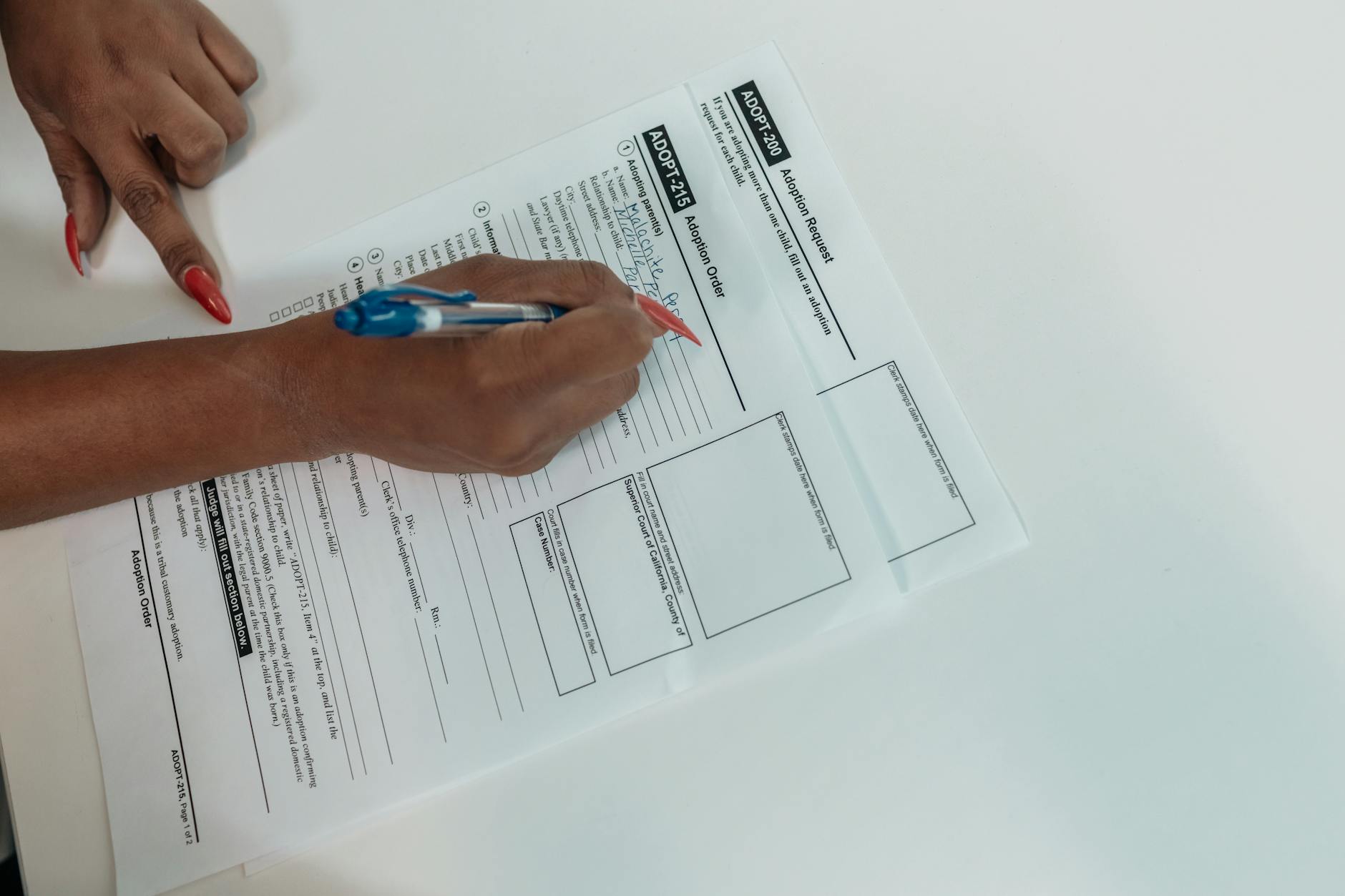
A self-employed pre-approval can be broken into six distinct stages. Knowing what happens at each stage helps you prepare documents correctly and avoid delays.
Stage 1: Eligibility Self-Check (15 minutes)
Before applying, check: ABN age, GST registration, credit score, deposit size, and loan purpose. If your ABN is less than 12 months old, only a handful of non-bank specialists will consider your application—and typically only for investment or business-purpose loans, not owner-occupied.
Stage 2: Document Collection (1–7 days)
Gather all documents listed above. The biggest bottleneck is the accountant’s letter. In peak tax season (July–October), accountants can take 2–3 weeks to provide a letter, so plan your application around their schedule.
Stage 3: Broker or Direct Application (1 day)
Self-employed applicants achieve a 23% higher pre-approval success rate when applying through an experienced mortgage broker who specialises in self-employed lending, compared with going direct to a bank (broker industry data, FBAA 2026). The broker can match your profile to the lender most likely to approve it, sparing your credit file unnecessary hits.
Stage 4: Preliminary Assessment and Credit Check (1–2 days)
The lender performs a hard credit enquiry, reviews your Equifax/Experian/illion report, checks for defaults, judgments, and excessive enquiries. A single paid default under $500 may be overlooked by non-bank lenders. Multiple recent enquiries (>3 in 6 months) will reduce your credit score and may trigger a decline.
Stage 5: Income and Serviceability Assessment (2–4 days)
The assessor annualises your BAS and bank statement credits, applies the haircut, adds any supplementary income (rental, investment, spousal), subtracts the HEM (Household Expenditure Measure) plus declared liabilities and proposed loan repayments, and calculates the Net Cash Surplus. Surplus below $100 per month results in a decline.
Stage 6: Conditional Approval Issued (1 day)
You receive pre-approval with conditions: maximum loan amount, loan term, product type, and specific conditions that must be met before formal approval (e.g., satisfactory valuation, confirmation of no change in circumstances, updated bank statements). Pre-approval is usually valid for 30–90 days; it does not lock the interest rate.
Why 41% of Self-Employed Pre-Approvals Are Declined Before Assessment
APRA’s Quarterly ADI Property Exposures data for Q1 2026 shows that 41% of self-employed home loan applications are declined before they reach full assessment. The three biggest killers:
1. Inconsistent Income Numbers Across Documents
The BAS says one number, the bank account shows another, the accountant declares a third. When inconsistency exceeds 15%, the application is typically suspended pending explanation—or declined. Solution: Reconcile all three data points before applying. Provide a simple one-page reconciliation if there is a timing difference (e.g., cash versus accrual accounting).
2. ABN Cancellation Gaps
Even a single day of cancelled ABN registration can be fatal for major bank applications. Many self-employed people briefly cancel their ABN between contracts or projects, then re-register. That restart resets the continuous trading clock. If your ABN shows a gap, you must be upfront and provide a reason. Non-bank lenders are more lenient but will still impose conditions.
3. Undeclared Liabilities
Lenders cross-reference bank statements with credit reports. A business lease, equipment finance, or personal loan that appears as a direct debit but was not declared in the application will be flagged. In 2026, comprehensive credit reporting (CCR) captures more liability data than ever before, down to Buy Now, Pay Later accounts.
Q: Can I get pre-approved if my accountant refuses to provide an income letter?
Some accountants are reluctant to provide income declarations due to professional indemnity concerns. In that case, you can use a self-certified low-doc loan where the lender relies solely on BAS and bank statements. However, expect a higher interest rate (typically a 0.30–0.50% premium over an accountant-declared alt-doc loan) and a lower borrowing cap. Only non-bank lenders offer this pathway.
Q: Will a pre-approval protect me from rate rises?
No. A pre-approval is not a rate lock. If the RBA increases the cash rate or the lender adjusts its product pricing during your pre-approval period, the offered rate may change. Your serviceability will also be re-assessed at the current rate environment when you find a property. Consider a rate lock product if you are buying at auction or expect a slow property search.
Q: Can I switch from low-doc to full-doc after pre-approval?
Yes, and this is a smart strategy. If you receive a low-doc pre-approval and your next tax return shows strong declared income, you can ask your broker to switch to a full-doc assessment before you go unconditional. This can reduce your interest rate by 0.45–0.90% and increase your LVR cap. The key condition is that the tax return and notice of assessment must show income equal to or greater than the figure used in your low-doc application.
Q: How many properties should I shortlist with a pre-approval?
A pre-approval is subject to a satisfactory valuation on the specific property you purchase. If you choose a property in a high-risk postcode or an unusual security type (e.g., rural, serviced apartment, studio <40sqm), the lender may decline at formal approval despite the pre-approval. Provide your broker with the address before making an offer so they can check the lender’s acceptable security policy.
Q: Does using a broker improve my self-employed pre-approval chances?
Industry data from the FBAA (2026) indicates that self-employed applicants using an accredited mortgage broker have a 23% higher success rate on first submission. Brokers can navigate the nuanced self-employed policies of 30+ lenders, avoid credit file damage from multiple applications, and present your income in the strongest compliant format. The broker is paid by the lender, not by you, for residential loans.
Reference Sources
- APRA Quarterly ADI Property Exposures, December 2025 – https://www.apra.gov.au/quarterly-adi-property-exposures – Official regulator data on loan-to-valuation ratios, serviceability policies, and decline rates for self-employed borrowers. Updated quarterly.
- Pepper Money Low-Doc and Alt-Doc Product Guide, Q1 2026 – https://www.pepper.com.au/ – Non-bank lender product specifications, including minimum ABN period, acceptable documentation, and LVR caps for self-employed loans.
- CoreLogic Hedonic Home Value Index, February 2026 – https://www.corelogic.com.au/ – Benchmark property data used by lenders for automated valuations during pre-approval and formal approval.
- Liberty Financial Self-Employed Lending Guide 2026 – https://www.liberty.com.au/ – Detailed policy on flexible self-employed verification, including low-doc income haircuts, acceptable BAS age, and serviceability calculator methodology.
- Equifax Australia Credit Score and Comprehensive Credit Reporting Guide 2026 – https://www.equifax.com.au/ – Explanation of how CCR data affects self-employed credit assessments, including hard enquiry thresholds and default treatment.